Sanding: The Unsung Hero of a Perfect Finish
Think of sanding as the foundation of your entire finishing project. It’s not just about making wood feel smooth; it’s a detailed conversation with the material, preparing it to accept and showcase the finish you’ve chosen. Skipping or rushing this step is like building a house on shaky ground—the final result will always show the cracks in your prep work.
Why Sanding is Non-Negotiable for Woodworking Success
Sanding is the bridge between raw construction and refined beauty. Its primary job is to remove the imperfections left behind by milling and cutting tools, such as saw marks, planer snipe, and surface scratches. Beyond that, it levels the wood fibers, creating a uniform surface that feels great to the touch and looks professionally executed. A properly sanded surface ensures that your paint, stain, or clear coat will adhere correctly and absorb evenly, preventing blotches and blemishes that can ruin an otherwise perfect project. In short, proper sanding is an investment of time that pays massive dividends in the quality of your final finish.
Beginning with the End in Mind: How Your Desired Finish Dictates Your Sanding Strategy (Paint, Stain, Natural)
The single most important principle in sanding is this: your final finish determines your entire sanding process. You don’t sand every project the same way.
- For Paint: The goal is a perfectly smooth, non-porous canvas. Paint sits on top of the wood, so your job is to eliminate any texture or flaw that could show through the topcoat. This often involves sanding to a medium-fine grit and using primer as part of the process.
- For Stain: The goal is to open the wood grain just enough for even absorption. Stain works by soaking into the wood fibers. Sanding too little will leave the surface rough and uneven, while sanding with too fine a grit can actually polish the wood, closing off the pores and preventing the stain from penetrating deeply.
- For Natural Finishes (Oils, Waxes, Clear Coats): The goal is to celebrate the wood itself. These finishes enhance the natural grain and texture. This requires sanding to a very fine grit to achieve a silky, touchable surface where the wood’s character is the star of the show.
Understanding this “end in mind” approach from the very beginning will guide every decision you make, from which sandpaper grit to start with to when you can finally say the prep work is done.
The Foundation: Understanding the Role of Sanding in Wood Finishing
Before we dive into the tools and techniques, let’s solidify our understanding of what sanding actually accomplishes at a microscopic level. It’s more than just friction; it’s a controlled process of refining a wood surface.
Beyond Smoothness: How Sanding Prepares the Wood Surface
At its core, sanding is the process of scratching a wood surface with an abrasive material. The magic lies in making those scratches progressively smaller and smaller until they are invisible to the naked eye. This sequence of controlled abrasion does several things. First, it removes machine marks and dents from the raw lumber. Second, it levels out the wood fibers, creating a flat, consistent plane. This is especially important for furniture where flat surfaces and tight joints are critical. Finally, it gently “opens” the pores of the wood, preparing it for the next step. A well-sanded surface is clean, uniform, and ready for whatever finish you have planned.
The Impact of Sanding on Finish Adhesion and Absorption
How well your finish sticks and looks depends heavily on the quality of your sanding prep. For film-forming finishes like paint, primer, and polyurethane, the microscopic scratches created by sandpaper act as anchors. They create a “mechanical tooth” that gives the finish something to physically grip onto, ensuring a durable bond that won’t peel or chip easily.
For penetrating finishes like stain and oil, the role of sanding is about controlling absorption. An unsanded or poorly sanded surface has inconsistent porosity, leading to a blotchy, uneven stain job. Proper sanding creates a uniform surface where the wood pores are opened to a consistent depth, allowing the stain to soak in evenly and reveal the true depth and color you intended. This preparation is a key reason the global abrasives market continues to grow, with its value projected to reach USD 76.93 billion by 2032.
The Relationship Between Sanding and Wood Grain
The grain is the directional pattern of the wood fibers. Working with the grain is a fundamental rule in woodworking, and it’s especially crucial during sanding. Sanding parallel to the grain ensures that the tiny scratches you create with the abrasive align with the natural texture of the wood, making them blend in and become invisible.
Sanding against or across the grain, however, severs these wood fibers and creates deep, noticeable scratches that run perpendicular to the grain pattern. These cross-grain scratches are often difficult to see on raw wood but will jump out glaringly once a stain or clear finish is applied, as the finish pools in these tiny troughs and highlights the mistake. Always orient your sanding motion to follow the direction of the wood grain for a clean, professional result.
Essential Wood Sanding Tools & Equipment
Having the right tools makes any job easier, and sanding is no exception. Your arsenal will likely include a mix of manual tools for control and power tools for efficiency. The global wood sander market reflects this need, valued at approximately $1.2 billion as of 2024 and projected to grow.
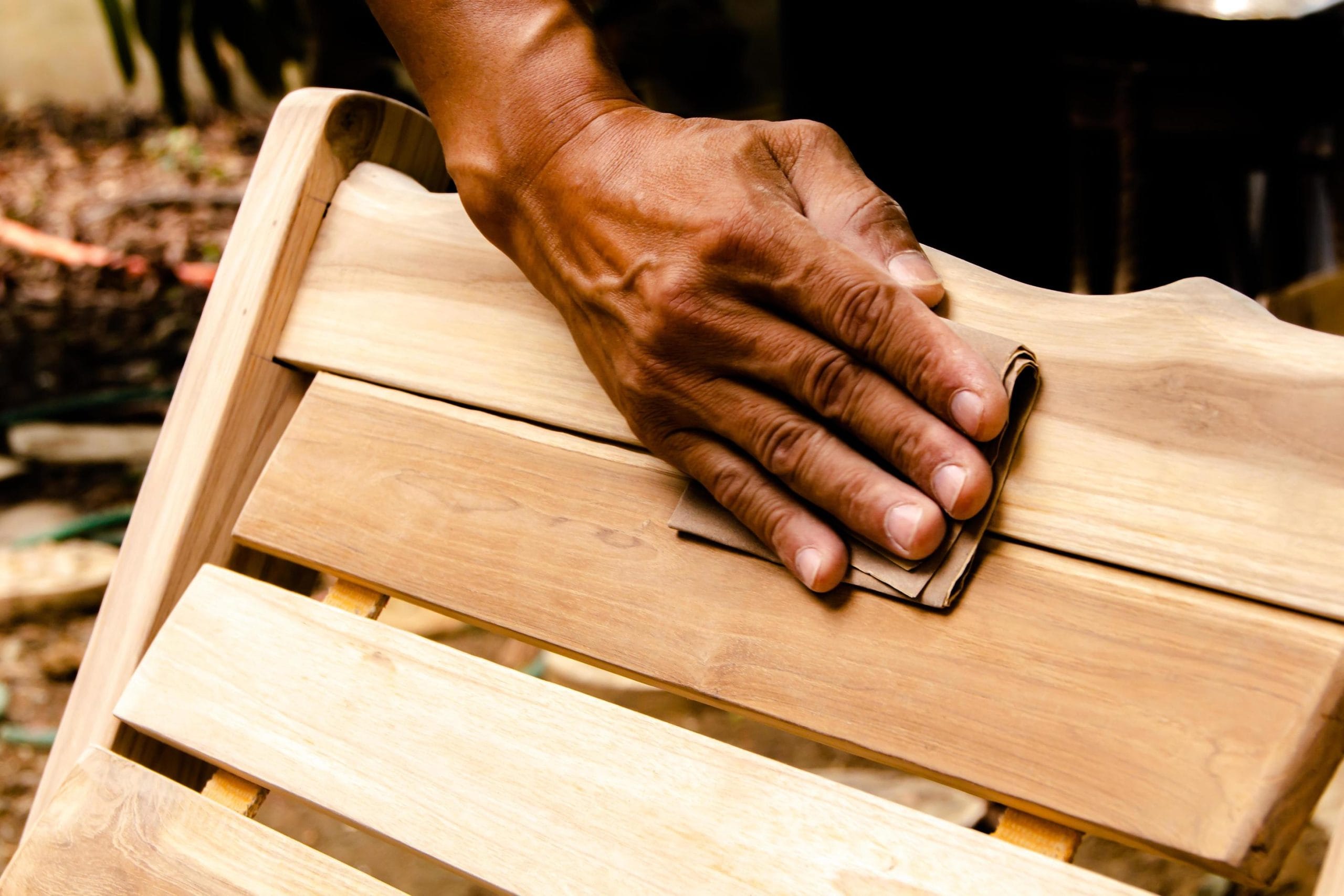
Hand Sanding Essentials: Blocks, Sponges, and Flexible Abrasives
Never underestimate the power of hand sanding. It offers a level of control that power tools simply can’t match, making it essential for final touches, delicate profiles, and smoothing edges.
- Sanding Blocks: A simple cork, rubber, or wooden block provides a firm, flat backing for a sheet of sandpaper. This ensures you apply even pressure and is perfect for sanding flat surfaces and preventing your fingers from creating grooves or rounding over sharp edges.
- Sanding Sponges: These are foam blocks coated with an abrasive material. Their flexibility makes them ideal for sanding curved surfaces, moldings, and other contoured shapes where a rigid block can’t reach. They conform to the profile of the wood, providing consistent contact.
- Flexible Abrasives: For intricate carvings or detailed turnings, you might use strips of sandpaper cloth or specialized abrasive cords that can be worked into tight crevices.
Power Sanders: Choosing the Right Tool for the Job
Power sanders are your best friend for tackling large surfaces and removing material quickly. Each type of sander has a specific purpose.
- Random Orbital Sander: This is the most versatile and essential power sander for any woodworker. It features a round pad that spins in circles (orbit) while also oscillating in a random pattern. This dual action prevents the abrasive from following the same path twice, which virtually eliminates the swirl marks that older orbital sanders were known for. It’s the go-to tool for most finishing prep on flat surfaces.
- Belt Sander: This is the heavyweight champion of sanding. A belt sander is a powerful, aggressive tool designed for rapid material removal. It’s perfect for flattening very rough surfaces, removing old paint or varnish, or scribing cabinets to an uneven wall. Use a belt sander with caution, as it can remove a lot of wood very quickly and can easily gouge a surface if not handled correctly.
- Sheet Sander (or Finishing Sander): This sander uses a square or rectangular pad that vibrates in a small orbital pattern. It’s less aggressive than a random orbital sander and is typically used for final smoothing right before finishing. They are great for getting into inside corners where a round pad can’t reach.
Crucial Support Gear for a Dust-Free and Safe Environment
Sanding creates a massive amount of fine dust, which is not only messy but also a health hazard. Protecting yourself and your workspace is non-negotiable.
- Dust Collection: Most modern power sanders come with a dust port that can be attached to a shop vacuum. This is the most effective way to capture dust at the source, keeping your air and your project surface clean.
- Personal Protective Equipment (PPE): Always wear a high-quality dust mask or respirator to protect your lungs from inhaling fine wood particles. Safety glasses are also a must to protect your eyes from airborne debris.
- Lighting: Good lighting is critical for spotting subtle imperfections. A low-angle “raking” light cast across the surface will highlight any remaining scratches, swirls, or dents that you might miss under overhead lighting.
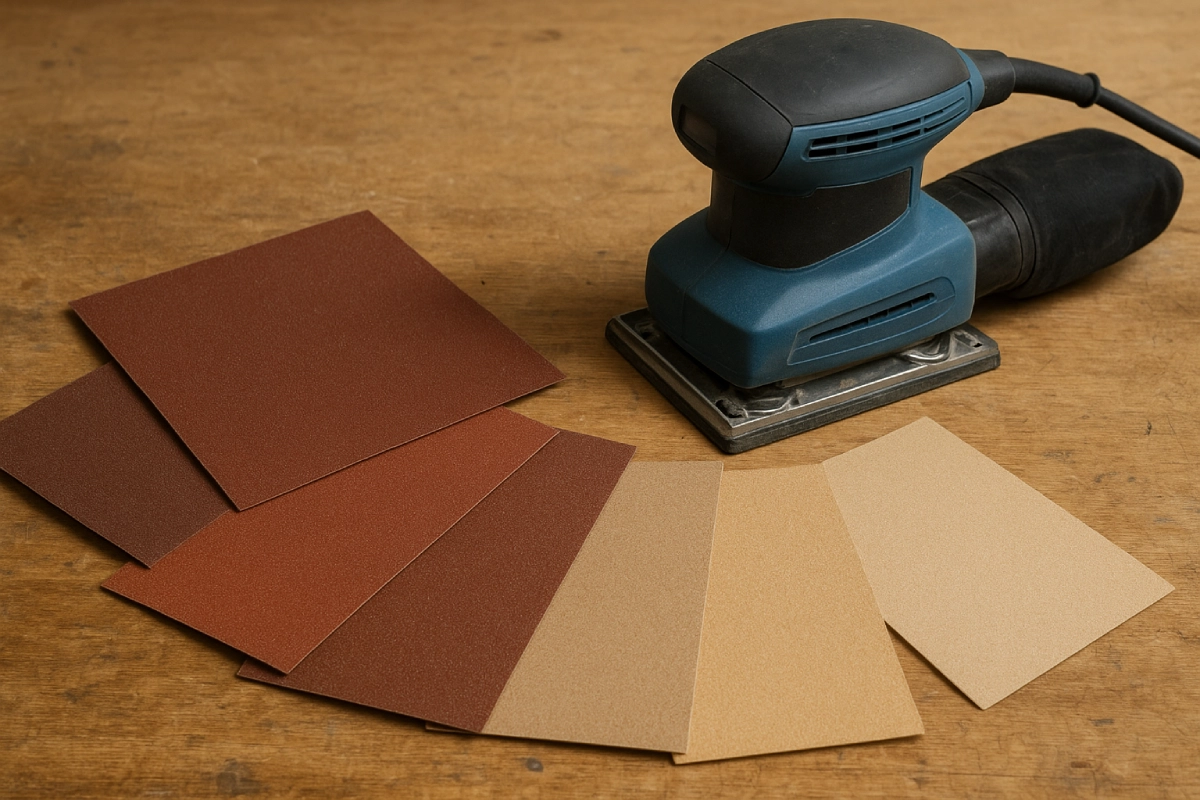
The Science of Sandpaper: Grits, Abrasives, & Progression
Sandpaper is the consumable at the heart of the sanding process. Understanding its components—grit, abrasive material, and backing—is key to using it effectively.
Understanding Grit Numbers: From Coarse to Micro Grit
The number on the back of sandpaper is its “grit” number, which indicates the size of the abrasive particles. The lower the number, the larger and more aggressive the particles are. The higher the number, the finer and smaller the particles are.
- Coarse (40-80 Grit): Used for heavy material removal, stripping old finishes, or shaping rough wood.
- Medium (100-150 Grit): A good starting point for most raw wood projects. It removes milling marks and smooths the surface without being overly aggressive.
- Fine (180-220 Grit): This is the standard range for final sanding before applying most stains and clear coats. It creates a smooth surface with very fine scratches that are easily hidden by the finish.
- Very Fine (240-400 Grit): Used for sanding between coats of finish to knock down any dust nibs or imperfections, or for prepping a surface for a high-gloss paint job.
- Micro Grits (600+): These are used for polishing finishes to a glass-like sheen, not typically for sanding raw wood.
Types of Abrasive Materials: Choosing the Right Abrasive for Wood
The abrasive mineral itself plays a role in how the sandpaper performs. While there are many types, two are most common in woodworking:
- Aluminum Oxide: This is the most popular choice for wood sanding. It’s a durable, long-lasting abrasive that fractures during use, exposing new sharp edges. This self-sharpening quality makes it efficient for both hardwoods and softwoods. It’s typically light brown or grayish in color.
- Garnet: This is a natural abrasive that is sharper than aluminum oxide but wears down more quickly. It’s known for producing a very smooth surface and is often preferred by fine furniture makers for final hand sanding, especially on woods like cherry. It has a distinctive reddish-brown color.
Other abrasives like silicon carbide (often used for wet sanding finishes) and ceramic alumina (used for aggressive material removal on belts) also have their place, but aluminum oxide will be your primary workhorse.
Sandpaper Backing & Coating: Open Coat vs. Closed Coat, Paper vs. Cloth
The backing and coating affect the sandpaper’s durability and performance.
- Backing: Most sandpaper for hand sanding has a paper backing, graded by weight (A being lightest, F being heaviest). Power sander discs often use a more durable cloth or film backing to withstand heat and friction.
- Coating (Open vs. Closed): This refers to how much of the backing is covered by abrasive grit. Closed-coat sandpaper has 100% abrasive coverage and is good for hardwoods, providing a fast cut. Open-coat sandpaper has about 50-70% coverage, with space between the grits. This space helps prevent the paper from clogging with dust and resin, making it the superior choice for sanding softwoods like pine or for removing old, gummy finishes.
The Essential Grit Sequence: Why You Can’t Skip Steps
The golden rule of sanding is to progress through the grits sequentially. Each successive grit is designed to remove the scratches left by the previous, coarser grit. For example, if you start with 120 grit, your next step should be 150 or 180 grit.
Skipping a grit—say, jumping from 120 directly to 220—is a false economy. The fine 220 grit sandpaper will have to work much harder and longer to remove the deep scratches left by the 120 grit. You’ll end up spending more time sanding, wearing out your sandpaper faster, and likely leaving behind deep swirl marks that will only appear after you apply a finish. Work your way up one or two steps at a time for the best, most efficient results.
Mastering Wood Sanding Techniques for Flawless Results
With the right knowledge and tools, it’s time to focus on technique. Consistent, methodical execution is what produces a flawless surface.
Initial Surface Preparation: Cleaning, Repairs, and Addressing Imperfections
Before you even touch sandpaper to wood, inspect your project. Remove any glue squeeze-out with a scraper, as dried glue will not accept stain. Fill any nail holes or cracks with a quality wood filler that matches your wood species or is stainable. Clean the entire surface with a cloth dampened with mineral spirits or a vacuum with a brush attachment to remove any loose dirt or debris that could get ground into the wood during sanding.
Hand Sanding Techniques: Control and Precision
When sanding by hand, wrap your sandpaper around a sanding block for flat surfaces. Move the block back and forth in long, straight strokes, always following the direction of the wood grain. Apply light, even pressure. Let the sandpaper do the work; pressing too hard will create deeper scratches and tire you out. For curved surfaces, use a sanding sponge or a piece of sandpaper folded to fit the contour. The goal is a uniform feel and appearance across the entire piece.
Power Sanding Techniques: Efficiency and Avoiding Common Pitfalls
When using a random orbital sander, the key is to keep the sander moving constantly. Don’t let it sit in one spot, as this can create a noticeable divot. Move the sander slowly and deliberately across the surface at a rate of about one inch per second, overlapping each pass by about 50%. Let the weight of the tool provide the pressure; don’t lean on it. A common mistake is tilting the sander on its edge to attack a stubborn spot. This will create deep, crescent-shaped gouges that are very difficult to remove. Always keep the sander’s pad flat on the surface.
Understanding Wood Grain Direction: Hardwood vs. Softwood Considerations for wood sanding
Always sand with the grain, but be aware that some woods can be tricky. On pieces where the grain changes direction, such as a tabletop with a “breadboard” end, sand each section separately according to its grain direction. Softwoods like pine and fir are more prone to scratching and denting, so they require a lighter touch and a careful grit progression. Hardwoods like oak and maple are more durable but may require starting with a slightly coarser grit to remove machine marks effectively.
Inspecting Your Work: Using Lighting and Touch to identify any issues
Your eyes and your fingertips are your best inspection tools. Periodically stop sanding, wipe away the dust, and check your progress. Use a low-angle light to reveal any remaining scratches or swirl marks. Close your eyes and run your fingertips lightly over the surface. Your sense of touch is incredibly sensitive and can detect imperfections your eyes might miss. Don’t move to the next finer grit until the entire surface feels and looks uniform.
Strategic Sanding for Specific Finishes: The “End in Mind” Approach
Here is where we apply our guiding principle. The final grit you sand to and the nuances of your technique depend entirely on whether you are applying paint, stain, or a natural finish.
Sanding for Paint: The Key to a Durable, Smooth Topcoat
When painting wood, your goal is to create a surface that is as smooth and flawless as possible. Since paint is an opaque film that sits on top of the wood, any underlying texture can show through.
For most projects, sanding the raw wood up to 150 or 180 grit is sufficient. Going much finer can make the surface too slick for the primer to adhere to properly. After sanding, apply a coat of high-quality primer. Once the primer is dry, sand it lightly with 220-grit sandpaper. This step, known as “de-nibbing,” smooths out any raised grain or dust particles trapped in the primer, creating the perfect base for your topcoat of paint. The result will be a durable, glass-smooth painted finish.
Sanding for Stain: Achieving Even Color and Depth
Sanding for stain is a delicate balance. You need the surface to be smooth, but you also need the wood pores to be open enough to accept the stain evenly.
The final grit you choose has a direct impact on the final color. A surface sanded to 120 grit will have more open pores and will absorb more stain, resulting in a darker, richer color. A surface sanded to 180 or 220 grit will be smoother with more closed-off pores, absorbing less stain and yielding a lighter color. For most hardwoods like oak and walnut, a final sanding with 180 grit is a great all-around choice. For woods prone to blotching, like pine, cherry, and maple, sanding to a finer 220 grit can help limit uneven stain absorption.
Sanding for Natural Finishes (Oils, Waxes, Clear Coats)
When you’re not trying to color the wood, the focus shifts to the tactile quality of the surface. Finishes like oil, wax, and clear polyurethane are designed to enhance the natural beauty and feel of the wood. For these, you’ll want to sand to a higher grit to achieve a silky-smooth surface.
Sanding up to 220 grit is a good standard. For a truly luxurious feel, especially with oil finishes that penetrate and harden the wood fibers, you can continue sanding up to 320 or even 400 grit. This extra step burnishes the wood fibers, creating a surface that is incredibly smooth to the touch and has a subtle, elegant sheen once the finish is applied.
Essential Prep, Cleanup, & Post-Sanding Steps
You’ve done the hard work of sanding, but the job isn’t over yet. These final steps are what lock in the quality of your prep and ensure your finish goes on flawlessly.
Thorough Dust Removal: The Enemy of a Good Finish
Wood dust is the nemesis of a perfect finish. Even a tiny amount of leftover dust can mix with your finish to create a gritty, rough texture. The best method for dust removal is a multi-step process.
- Vacuum: Use a shop vacuum with a soft brush attachment to remove the vast majority of the surface dust. Get into all the corners and crevices.
- Compressed Air (Optional but effective): If you have an air compressor, use a blow gun to blast dust out of deep pores and tight corners that a vacuum can’t reach. Do this in a well-ventilated area or outdoors.
- Tack Cloth or Damp Rag: For the final step, lightly wipe the entire surface with a tack cloth or a lint-free rag slightly dampened with mineral spirits (for oil-based finishes) or denatured alcohol (for water-based finishes). This will pick up the last remaining microscopic dust particles, leaving you with a perfectly clean surface.
Conditioning the Wood (if applicable for certain stains)
For woods that are prone to blotchy staining—like pine, maple, cherry, and birch—using a pre-stain wood conditioner is a crucial post-sanding, pre-staining step. This product is essentially a thin, clear sealer that partially fills the wood pores. It helps the wood absorb the stain more evenly by preventing the more porous areas from soaking up too much pigment. Apply the conditioner according to the manufacturer’s instructions, let it penetrate, wipe off the excess, and then apply your stain within the recommended time window.
What’s Next?
You’ve now journeyed through the entire wood sanding process, from understanding its fundamental importance to mastering the specific techniques for any finish you can imagine. You’ve learned that sanding is not a mindless chore but a thoughtful, strategic craft. The key takeaway is the “end in mind” philosophy: your sanding strategy is always dictated by your desired outcome, whether it’s a flawless painted surface, a deeply-colored stain, or a silky-smooth natural finish.
You’ve accomplished a great deal by reading this guide:
- You understand why sanding is critical for finish adhesion and smoothness.
- You can now select the right tools and sandpaper for any woodworking task.
- You have mastered the techniques for both hand and power sanding, including the non-negotiable grit progression.
- Most importantly, you know how to tailor your approach specifically for paint, stain, and natural finishes to achieve professional-level results.
Your next step is to put this knowledge into practice. Grab your next project, whether it’s refinishing old furniture or building something new. Before you begin, pause and decide on your final finish. Let that decision guide your tool selection, your grit sequence, and your technique. Feel the surface, watch it transform under your hands, and take pride in knowing that the beautiful finish you achieve started with the perfect prep work you learned here. Happy woodworking